Send returns to
Darussalam Publishers KSA — Returns Department
Al Murabba, King Faisal Street, Riyadh 12612
Begin your journey of beneficial knowledge — explore our authentic Islamic library.
Explore Collection →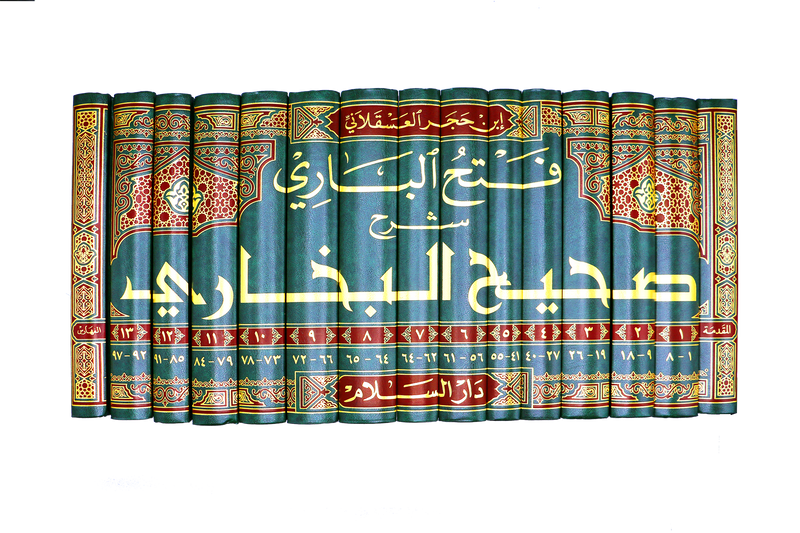
Publisher: Darussalam
Tax included. Shipping calculated at checkout.
Notify me when available
We'll email you the moment this is back in stock.
You Might Also Like
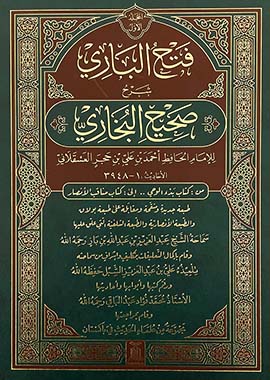
Fath ul Bari (فتح الباري بشرح صحيح البخاري), the commentary of Al-Hafiz Ibn Hajar al-Asqalani on Sahih al-Bukhari, is the standard reference for anyone who studies hadith seriously, and this is the complete Darussalam Arabic edition in 15 hardcover volumes and 10,780 pages. Every hadith in Sahih al-Bukhari is explained here: who narrated it, what its words mean, which rulings the scholars took from it, and how it relates to other narrations. For students of knowledge, imams and researchers in Saudi Arabia and beyond, Fath al-Bari is the book the others refer back to.
Sahih al-Bukhari is the most authentic book after the Quran in the view of Sunni scholarship, but it is not an easy book. Imam al-Bukhari arranged his hadith under chapter headings that carry his own legal conclusions, repeated narrations in different chapters for different points, and often shortened a hadith where he had given it in full elsewhere. A commentary, or sharh, is needed to unlock it, and many scholars wrote one. Fath al-Bari became the one that stayed.
Its reputation is summed up in a famous remark. When the Yemeni scholar al-Shawkani was asked to write a new commentary on Sahih al-Bukhari, he declined with the words "There is no hijrah after al-Fath," playing on the hadith about migration after the Conquest of Makkah to say that after Fath al-Bari no further commentary was needed.
Ibn Hajar identifies the narrators in each isnad, clarifies names that are easily confused, and traces the other routes by which the same hadith reached al-Bukhari and other compilers. This is where his mastery of rijal, the science of narrators, shows most clearly.
Scholars say that "al-Bukhari's fiqh is in his chapter headings." Fath al-Bari explains why each hadith sits under its heading and what legal point al-Bukhari was making by placing it there.
Difficult words and expressions are explained with reference to the Arabic language, so the reader understands exactly what the Prophet (peace be upon him) and the Companions said.
For each hadith, Ibn Hajar sets out the rulings derived from it and the positions of the schools of fiqh and earlier scholars, weighing their evidence.
Where hadith appear to conflict, he brings the different versions together and explains how the scholars reconciled them, one of the most valuable parts of the work for students.
Shihab ad-Din Ahmad ibn Ali ibn Hajar al-Asqalani (773-852 AH, 1372-1449 CE) was born in Cairo and became the leading hadith scholar of his era. He served for many years as chief judge of Egypt, taught generations of students, and earned the title Amir al-Mu'minin fil-Hadith. His other works are still studied everywhere, among them Bulugh al-Maram (available as Bulugh Al-Maram in English and Bulugh al-Maram in Urdu), Al-Isabah fi Tamyiz as-Sahabah on the Companions, and Tahdhib at-Tahdhib and Taqrib at-Tahdhib on hadith narrators.
Fath al-Bari was his life's major project. He wrote its introduction, Hady as-Sari, first, then worked on the commentary itself from 817 AH until he completed it in 842 AH, roughly 25 years. Its completion was celebrated in Cairo with a large public gathering attended by scholars and dignitaries.
| Title | Fath al-Bari bi Sharh Sahih al-Bukhari (فتح الباري) |
| Author | Al-Imam Al-Hafiz Ahmad ibn Ali ibn Hajar al-Asqalani |
| Publisher | Darussalam |
| Language | Arabic |
| Volumes | 15 |
| Pages | 10,780 in total |
| Size | 17x24 cm |
| Binding | Hardcover |
Printed as a uniform 15-volume hardcover set, this edition is built for daily use on a study desk and for long-term use in a home, masjid or institutional library.
Few people read Fath al-Bari cover to cover in one pass. Most students use it alongside a copy of Sahih al-Bukhari, reading a chapter of the hadith and then turning to Ibn Hajar's commentary on it. Teachers often work through one book of Sahih al-Bukhari at a time, such as the Book of Faith or the Book of Prayer, and use the commentary to prepare the lesson. Researchers and imams use it as a reference, looking up a specific hadith to see its routes of narration, the meaning of a phrase or the rulings the scholars took from it. Because the set follows the order of Sahih al-Bukhari, any hadith is easy to find once you know its book and chapter.
This set is for readers who can work with classical Arabic: students at Islamic universities and madrasahs, hadith and fiqh students, imams and khateebs preparing lessons, teachers and researchers. If you are building a serious Islamic library, Fath al-Bari belongs next to Sahih al-Bukhari itself, and next to Tafsir Ibn Kathir as the core reference for tafsir.
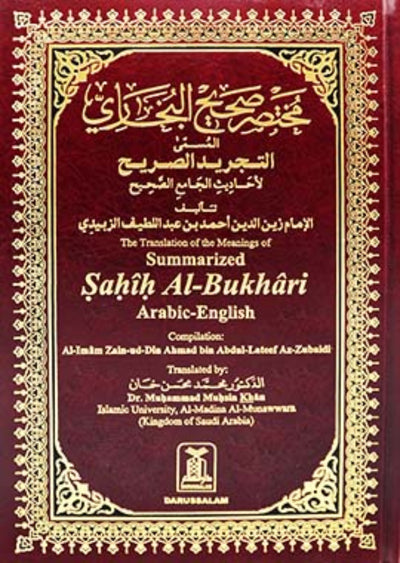
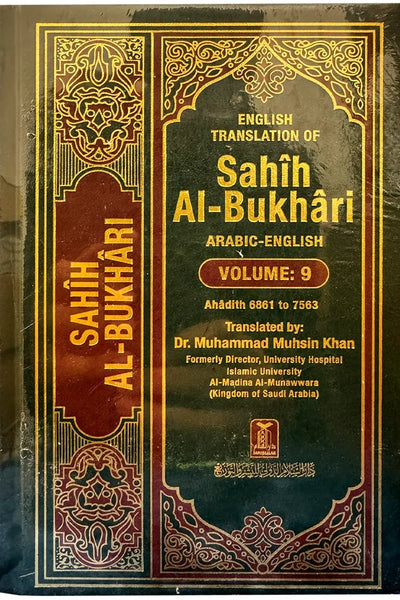
Readers who don't read Arabic should start with Sahih Al-Bukhari with English Translation (9 volumes) or Summarized Sahih Al-Bukhari (Arabic and English). For more hadith books, browse the Hadith collection, the Sahah e Sitta collection of the six major books, or biographies of the great scholars in Imams & Scholars.
Fath al-Bari bi Sharh Sahih al-Bukhari is the commentary on Sahih al-Bukhari written by Al-Hafiz Ibn Hajar al-Asqalani. It explains every hadith in al-Bukhari's collection: its chains of narration, its narrators, the meaning of its words, the rulings drawn from it, and how it fits with other narrations on the same subject. It is widely regarded as the greatest commentary ever written on Sahih al-Bukhari.
This Darussalam edition is a 15-volume Arabic hardcover set of 10,780 pages in total, printed at 17x24 cm.
This Darussalam set is the Arabic original. English readers can study the hadith themselves through the Darussalam 9-volume Sahih Al-Bukhari with English translation, which is available on Darussalam Store.
Shihab ad-Din Ahmad ibn Ali ibn Hajar al-Asqalani (773-852 AH, 1372-1449 CE) was a scholar of Cairo who served as chief judge of Egypt and is known by the title Amir al-Mu'minin fil-Hadith, the leader of the believers in hadith. His other famous works include Bulugh al-Maram, Al-Isabah on the Companions and Tahdhib at-Tahdhib on hadith narrators.
About a quarter of a century. He began the commentary in 817 AH and completed it in 842 AH, after first writing its long introduction, Hady as-Sari. Its completion was marked in Cairo with a large public gathering of scholars.
It is written for readers who can study classical Arabic: students of Islamic universities, hadith and fiqh students, imams, teachers and researchers. It is also a core reference for any Islamic library or masjid, because so many later works quote it.
It is a well-known play on the hadith "There is no migration after the Conquest (al-Fath)." When the scholar al-Shawkani was asked to write his own commentary on Sahih al-Bukhari, he declined with this phrase, meaning that after Fath al-Bari there was no need for another.
| Publisher | Darussalam Publishers |
|---|---|
| ISBN / Barcode | 38021869 |
| Weight | 16.5 kg |
| SKU | A10239 |
Free delivery on orders over 300 SAR. Standard delivery: 2–4 working days.
What readers say
Very happy
Very happy. The books were well packaged. Recommend.
A must-have for any Muslim library
This book is a must-have for any Muslim library. It is a comprehensive and well-written resource that covers a wide range of topics. I highly recommend it.
Very informative and helpful in my understanding of Islam
I found this book to be very informative and helpful in my understanding of Islam. It is a great resource for anyone who is interested in learning more about the religion.
I highly recommend it
This book is a great resource for anyone interested in learning more about Islam. It is well-written and easy to understand, and it covers a wide range of topics, from the basics of the faith to more advanced concepts. I highly recommend it.


Request a return within 15 days. We’ll review and respond within 24 hours.
Click Capture Image or drag the cursor to highlight a specific area


Hello! How can I help you today?